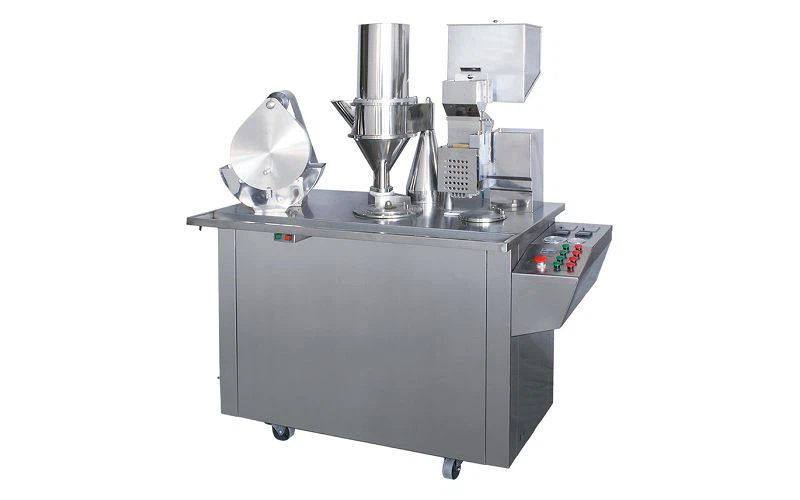
Capsule manufacturing is a critical part of pharmaceutical and nutraceutical production, where precision, speed, and hygiene directly influence product quality. As production demands increase, industries are moving toward advanced automation solutions that can handle large volumes with consistent accuracy.
An automatic capsule filling machine is designed to fully automate the capsule production process, from feeding empty capsules to filling, locking, and ejecting finished products. It is widely used in high-volume manufacturing environments where efficiency and uniformity are essential.
What Is an Automatic Capsule Filling Machine?
An automatic capsule filling machine is a high-speed industrial system that performs the entire encapsulation process with minimal human intervention. Unlike manual or semi-automatic systems, it is engineered for continuous operation and large-scale output.
The machine ensures that each capsule is filled with a precise quantity of material, maintaining consistency across thousands or even millions of units.
Working Process of Automatic Capsule Filling Machines
The working process of an automatic capsule filling machine is fully integrated and follows a systematic sequence of operations. Each stage is designed to ensure accuracy and efficiency.
1. Capsule Feeding and Orientation
Empty capsules are automatically loaded into the system. The machine then orients them correctly and separates the body and cap using a vacuum or mechanical mechanism.
2. Capsule Separation
Once aligned, the capsule shells are separated into two parts. The bodies are positioned for filling, while the caps are temporarily held aside.
3. Powder or Pellet Filling
The filling system measures and dispenses the required quantity of material into each capsule body. Depending on the machine design, it may use:
- Dosing discs
- Auger filling systems
- Vacuum-assisted filling units
This ensures uniform dosage across all capsules.
4. Capsule Closing and Locking
After filling, the machine automatically joins the capsule body and cap. A locking mechanism ensures the capsules are securely sealed to prevent leakage or damage.
5. Ejection and Collection
Finished capsules are ejected from the system and collected for inspection, polishing, or packaging.
6. Quality Control Integration
Advanced systems may include in-line inspection features to detect:
- Incorrectly filled capsules
- Damaged shells
- Weight variations
Defective units are automatically rejected from the production line.
Key Industrial Uses
Automatic capsule filling machines are essential in industries where large-scale, high-quality production is required.
Pharmaceutical Industry
This is the primary sector using automatic systems. Applications include:
- Antibiotic production
- Prescription drug manufacturing
- Controlled-release medications
- High-volume generic drug production
Consistency and regulatory compliance are critical in this industry.
Nutraceutical Industry
The nutraceutical sector relies heavily on capsule products for health supplements and wellness formulations.
Common uses include:
- Vitamin and mineral capsules
- Herbal supplement production
- Immune support formulations
- Sports nutrition products
Herbal and Ayurvedic Manufacturing
Traditional medicine industries use automatic machines to modernize production while maintaining formulation integrity.
Applications include:
- Herbal extract encapsulation
- Ayurvedic formulation production
- Standardized natural medicine capsules
Contract Manufacturing Organizations (CMOs)
CMOs require flexible and high-capacity systems to produce capsules for multiple brands.
Benefits include:
- High-speed batch production
- Consistent quality across different clients
- Efficient handling of multiple formulations
Large-Scale Food Supplement Industry
Food-grade supplement manufacturers also use capsule technology for functional products.
Examples include:
- Probiotic capsules
- Omega-3 supplements
- Energy and metabolism boosters
Advantages of Automatic Capsule Filling Machines
These machines offer several advantages that make them ideal for industrial production:
- High production speed and output capacity
- Minimal manual intervention
- Consistent dosing accuracy
- Reduced labor costs
- Improved hygiene and contamination control
They are designed to support continuous operation with minimal downtime.
Importance in Modern Manufacturing
With increasing global demand for capsule-based products, manufacturers require systems that can ensure both speed and quality. Automatic machines meet this need by integrating precision engineering with advanced automation technologies.
They also support compliance with strict pharmaceutical regulations, making them essential for global supply chains.
Conclusion
An automatic capsule filling machine plays a vital role in modern industrial production by combining speed, accuracy, and reliability. Its fully automated working process ensures consistent capsule quality while significantly increasing production efficiency.
From pharmaceuticals to nutraceuticals and herbal industries, these machines have become a cornerstone of large-scale capsule manufacturing. As demand continues to grow, automation will remain a key driver in improving productivity and maintaining global quality standards.