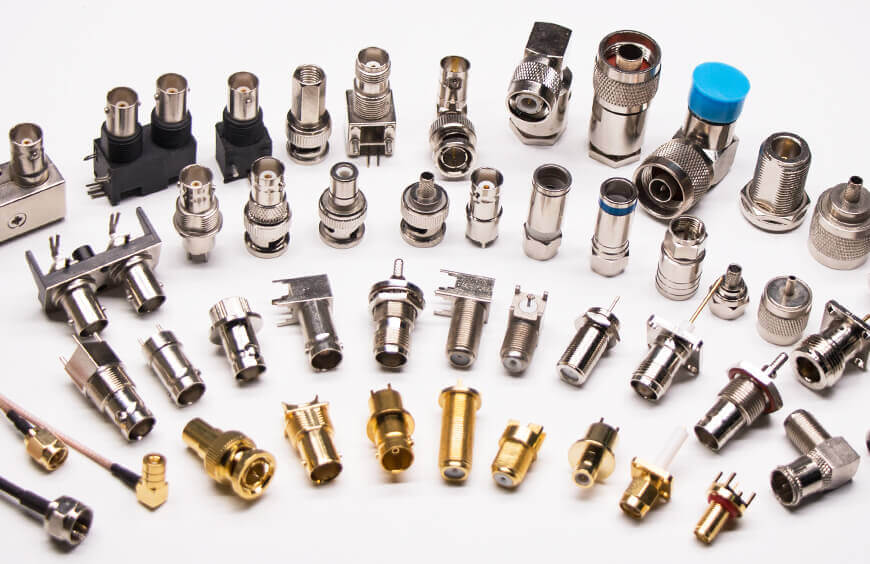
RF (Radio Frequency) connectors are critical components in modern communication systems, electronics, and industrial applications. They facilitate the transmission of high-frequency signals with minimal loss, ensuring that devices perform reliably. While the demand for RF connectors continues to grow, manufacturers face a series of challenges in producing connectors that meet rigorous performance, durability, and environmental standards. These challenges require advanced engineering, precision manufacturing, and continuous innovation to maintain quality and competitiveness.
An RF Connector Manufacturer must balance multiple factors, including cost, performance, and evolving industry requirements, to deliver high-quality products. These manufacturers navigate complex design constraints, material limitations, and manufacturing processes while striving to meet increasingly stringent standards. To explore solutions and high-performance products from a trusted source, a reliable RF Connector Manufacturer offers a wide range of connectors designed for various industries and applications.
Maintaining Signal Integrity
One of the primary challenges for RF connector manufacturers is ensuring signal integrity across a wide range of frequencies. RF connectors must be precisely engineered to minimize insertion loss, reflection, and crosstalk. Even small deviations in impedance or connector geometry can degrade signal quality, impacting the performance of the entire system. Manufacturers use advanced simulation tools and prototyping to address these issues, but achieving consistent performance in mass production remains a significant challenge, especially as devices operate at increasingly higher frequencies.
Precision Manufacturing Requirements
RF connectors require extremely tight manufacturing tolerances. Components must be machined, molded, or stamped with precision often measured in microns. Maintaining this level of accuracy during large-scale production is difficult, as slight variations can lead to performance failures. Manufacturers must invest in advanced CNC machinery, automated assembly systems, and skilled technicians to ensure each connector meets strict specifications. Additionally, high-precision manufacturing often increases production costs, forcing manufacturers to balance quality with affordability.
Material Selection and Availability
Material selection is critical in RF connector manufacturing. Metals such as brass, beryllium copper, and stainless steel are commonly used for contacts, while high-performance polymers serve as insulators. Connectors also often require plating with gold, silver, or nickel to enhance conductivity and resist corrosion. However, sourcing high-quality materials consistently can be challenging due to market fluctuations, supply chain disruptions, and rising costs. Manufacturers must carefully plan procurement and sometimes explore alternative materials without compromising performance or durability.
Environmental and Mechanical Durability
RF connectors are often used in harsh environments, including extreme temperatures, humidity, vibration, and corrosive conditions. Designing connectors that maintain performance under these stresses is a constant challenge. Manufacturers must conduct extensive testing, including thermal cycling, vibration, shock, and salt spray testing, to ensure reliability. Meeting these environmental standards adds complexity and cost to both design and production.
Technological Advancements and Customization
Rapid technological advancements in telecommunications, aerospace, automotive, and consumer electronics require RF connectors to support higher frequencies, miniaturized designs, and specialized applications. Keeping pace with these changes is challenging for manufacturers, as it requires continuous research and development, updating production processes, and providing customized solutions for clients. This demand for innovation can strain resources, especially for smaller manufacturers.
Regulatory Compliance and Standards
RF connector manufacturers must comply with multiple international standards, including ISO, IEC, and MIL specifications. Adhering to these standards ensures safety, reliability, and interoperability but adds complexity to the design and manufacturing process. Regular audits, certifications, and documentation are required, which can increase production timelines and operational costs.
Competition and Market Pressure
The global RF connector market is highly competitive, with numerous manufacturers vying for customers in telecommunications, aerospace, automotive, and electronics sectors. Price pressure, combined with the demand for higher performance and reliability, creates a challenging business environment. Manufacturers must continuously innovate while controlling costs to maintain a competitive edge, all while ensuring the quality and longevity of their products.
Conclusion
RF connector manufacturers face numerous challenges, including maintaining signal integrity, achieving precision manufacturing, sourcing materials, ensuring environmental durability, adapting to technological advancements, complying with regulations, and navigating a competitive market. Overcoming these challenges requires a combination of advanced engineering, state-of-the-art production techniques, rigorous testing, and ongoing innovation.
By partnering with an experienced RF connector manufacturer, businesses can access high-quality connectors that meet industry standards and perform reliably under diverse conditions. Despite the obstacles, manufacturers continue to develop solutions that support the growing demand for robust, efficient, and high-performance RF connectors across various applications and industries.