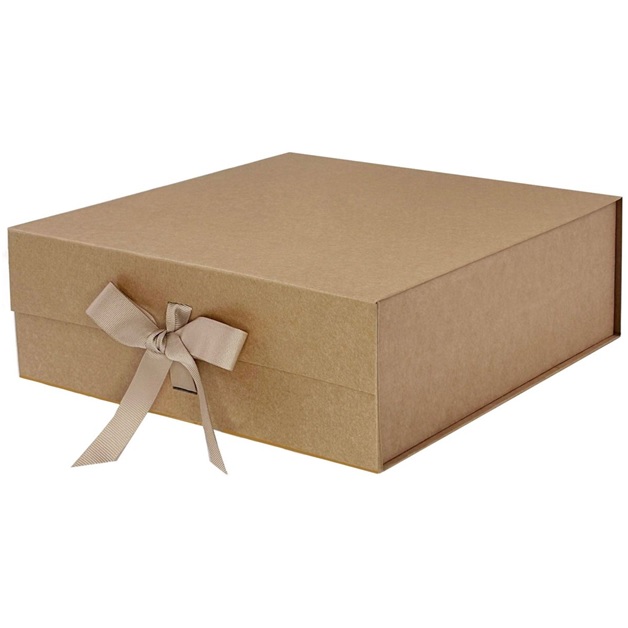
Kraft paper density, usually specified as weight in grams per square metre (gsm), sets how much load a package can carry, how well it resists tearing and crushing, and how much it costs. Choosing the right density, rather than simply the heaviest, is what turns a kraft sheet into a durable structure.
What kraft paper density means
Kraft paper is made by the sulfate (kraft) pulping process, which leaves long, strong wood fibres. Three related measures describe how dense and heavy a sheet is, and they are often confused.
- Basis weight (gsm). The mass of one square metre of paper. This is the figure on most spec sheets and what people usually mean by “density”.
- Caliper. The thickness of the sheet, measured in microns or points.
- True density. Basis weight divided by thickness, in grams per cubic centimetre. It shows how tightly the fibres are packed.
Two papers can share the same gsm and behave differently. A tightly pressed sheet is thin and stiff in tension, while a bulkier sheet of the same weight is thicker and more rigid in bending. That is why a spec should state both gsm and caliper.
Why density drives durability
Heavier, denser kraft carries more fibre per unit area, and that shows up in four properties that decide whether a package survives shipping.
- Burst strength. Resistance to pressure pushing through the sheet. It rises with basis weight and is tested with a burst or Mullen tester.
- Tear and puncture resistance. Long kraft fibres resist tearing well, and more of them resist it better.
- Stiffness. Bending stiffness grows quickly with thickness, so a small gain in caliper can improve a box wall far more than the added weight suggests.
- Compression and stacking strength. For corrugated and folding cartons, the liner weight and flute design together set how much stacked load a box can bear.
Density has diminishing returns, though. Past a certain point, extra weight adds cost, shipping weight and material use faster than it adds protection.
Matching paper weight to the packaging type
The right density depends on what the package must do. The ranges below are typical, not strict standards, and suppliers vary.
| Packaging type | Typical kraft weight (gsm) | Why this range |
| Wrapping paper, light bags | 60–120 | Flexible and low cost; low load |
| Shopping and retail bags | 80–150 | Handles moderate loads with good tear resistance |
| Mailer and corrugated liners | 125–300 | Supplies burst and puncture strength to the board |
| Folding cartons and kraft gift boxes | 250–400 | Holds a crisp fold and keeps its shape |
| Rigid box wrap | 100–150 | Covers a thick board core; the board carries the strength |
For rigid boxes, remember that the kraft sheet is mostly a skin. The strength comes from the greyboard core underneath, often 1–3 mm thick, so a heavier wrap adds little structure.
Building rigid and gift box structures
A durable rigid box is a system. A dense board core gives the walls their rigidity, a kraft wrap of moderate weight gives the surface and the brand finish, and tight corners and a well-fitted lid keep the structure from racking under load. Raising only one of these parts rarely fixes a weak box.
Buyers who source Kraft gift boxes wholesale should ask for the board thickness, the wrap gsm and the glue type, not just the outer dimensions, because identical-looking boxes can differ widely in how they survive stacking and transit. A supplier such as Premier Rigid Boxes should be able to provide these specifications on request, which is the standard a buyer should expect from any manufacturer.
Factors beyond density
Weight alone does not guarantee durability. Four other factors often decide the result.
- Fibre type. Virgin kraft fibres are longer and stronger than recycled fibres, which shorten each time they are reprocessed. Recycled kraft can be a sound choice, but it may need a higher gsm to match virgin strength.
- Moisture. Paper loses stiffness and compression strength as humidity rises. Damp storage or transit can erase the benefit of a heavier sheet.
- Grain direction. Paper is stronger and stiffer along the grain. Boxes should be cut so folds and the main load run in the stronger direction.
- Coatings and laminations. Water-based or film coatings add moisture and scuff resistance but can affect recyclability; check local recycling rules.
How to choose the right density
- Define the load. Note the product’s weight, fragility and how it will be stacked or shipped.
- Pick the structure first. Decide between a corrugated mailer, a folding carton or a rigid box, then choose the paper weight that suits that structure.
- Specify gsm and caliper together. Ask for both on every quote.
- Test a sample. Run a drop test, a compression test and a humidity check on a real unit before ordering in bulk.
- Weigh cost and sustainability. Use the lightest paper that passes testing. It lowers cost, shipping weight and material use.
Conclusion
Kraft paper density is a design variable, not a quality score. The strongest packaging comes from matching gsm and caliper to the structure, protecting the sheet from moisture, and confirming the result with real tests. Choose the lightest paper that meets the load, and the package will be durable, economical and lighter on the environment.