Commercial property value depends on more than building size or the number of available spaces. A convenient location can influence access, visibility, and movement, while thoughtful design can affect how comfortably people use a property. Together, these elements can strengthen appeal and relevance.
For businesses and investors, these factors provide useful points of comparison when evaluating opportunities. A well-connected address can attract attention, but the space must also be easy to use and suited to its purpose. This is why location and design deserve attention during commercial property investment decisions.
Why Location Matters to Commercial Property Value
Location influences how easily people reach a commercial property and how naturally it connects with its surroundings. Major roads, public transport, nearby residential areas, and established activity can affect movement around a site. These factors matter for retail and office spaces.
The right location should match the property’s purpose. Retail may benefit from visibility and customer access, while offices may need convenient commuting routes. Considering location in relation to intended use offers a practical way to understand its contribution to commercial value.
How Accessibility Can Strengthen Commercial Appeal
Accessibility matters when it supports the way a commercial space is expected to function. Convenient routes can make a destination easier to reach, while nearby transport connects it with surrounding areas.
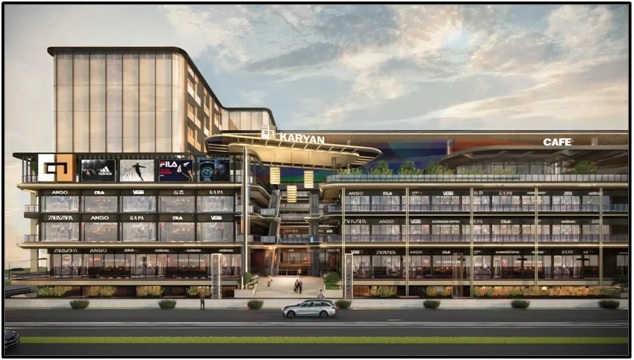
KARYAN Square offers a useful example of this relationship. Located in Wave City, NH-24, Ghaziabad, the five-floor development has approximately 3,598 square metres of built-up area, 243 shops, and three restaurants. Its mix of shopping, food, and leisure gives visitors several reasons to visit. The project is also about five minutes from the Delhi-Meerut Expressway, ten minutes from the Eastern Peripheral Expressway, and fifteen minutes from Noida Metro Station Sector 62. This shows how access and commercial variety can support visitor appeal.
How Design Influences Everyday Commercial Experience
Design can influence value by determining how effectively people interact with a property. Good planning can make entrances easier to understand, movement more comfortable, and commercial areas more practical. These details can affect visitor experience and business use.
Visual character has a role as well. A distinctive building can be easier to recognise, but appearance alone does not determine usefulness. Businesses need practical layouts, visitors need comfortable movement, and shared spaces need to support different activities. For commercial real estate companies, balancing visual appeal with practical use can become an important part of creating commercially relevant spaces.
Connecting Architectural Design With Functionality
A KARYAN GROUP development needs to respond to different groups of users. Retail customers may want convenient movement, offices may need practical layouts, and shared areas must accommodate varied activities. Together, these needs make design a functional advantage.
StreetWalk demonstrates this connection through its combination of office and retail spaces in Wave City. The four-floor project covers approximately 15,800 square metres and includes 378 retail shops, two anchor stores, two multiplexes, and four restaurants. Its design by Studio Lotus takes a more fluid approach than conventional box-like commercial forms, connecting architectural character with visitor experience. The project is also within reach of the Delhi-Meerut Expressway, Eastern Peripheral Expressway, and Noida Metro Station Sector 62, showing how design and accessibility can complement one another.
Key Design Factors That Can Support Commercial Value
Several practical elements can influence how useful and appealing a commercial property becomes:
- Layout: Well-planned spaces can make movement and daily business activities easier.
- Visibility: An identifiable building and clear commercial frontage can help businesses gain attention.
- Circulation: Comfortable movement between entrances, shops, offices, and shared areas can improve user experience.
- Flexibility: Adaptable spaces can respond to changing business requirements.
- Functionality: Practical planning can help businesses use available space effectively.
- Experience: Comfortable surroundings can encourage visitors to engage with a destination.
These factors work best together. A visually attractive property may struggle if movement is inconvenient, while an accessible site may not perform if internal planning does not serve users.
Why Location and Design Should Work Together
Don’t treat location and design as separate features when assessing a commercial development. Connectivity can bring people to a property, while internal planning and architectural character influence what happens after they arrive. The relationship becomes stronger when a development is designed around the activities it needs to support.
KARYAN GROUP brings these considerations together through commercial spaces that focus on functionality, aesthetics, strategic locations, flexibility, and future growth. Its portfolio includes office, retail, and mixed-use developments that respond to business requirements. This approach shows why location and design work best as connected parts of development.
Considering Long-Term Commercial Relevance
Commercial value also depends on how well a property remains useful as business needs change. Customer behaviour, transport patterns, and surrounding development can evolve. A space that responds to change may remain more relevant than one designed only for present requirements.
Evaluation should therefore go beyond appearance or address. Buyers and investors can consider connectivity, surrounding activity, layout, functionality, flexibility, and user needs before deciding.
The Role of Development Planning
KARYAN GROUP’s planning choices can influence how successfully location and design come together. Site selection, architectural planning, intended users, and commercial purpose can shape the environment. Considering them together can create useful, distinctive spaces.
For businesses, thoughtful planning can support operations and customer experience. For investors, it offers value beyond aesthetics. The work of a real estate development company can therefore be assessed by the relationship between site, design, functionality, and the property’s intended commercial purpose.
Conclusion
Location gives a commercial property its setting, while design determines how effectively that setting is experienced and used. Strong connectivity can improve accessibility and visibility, while practical planning can make a property more comfortable and functional. For those assessing commercial opportunities, selecting the right real estate development company can also provide a useful perspective on how these elements contribute to long-term commercial appeal.
For those seeking development expertise, KARYAN GROUP brings together commercial spaces, strategic locations, functionality, aesthetics, and forward-looking planning. Projects such as KARYAN Square and StreetWalk show different ways a commercial environment can connect accessibility, user experience, and practical design. Looking at these factors together can provide a clearer basis for understanding how location and design may contribute to commercial property value.