As surgical procedures become longer and more complex, operating tables are expected to do more than just hold the patient. Surgeons want quick, precise positioning, often in the middle of a procedure, without calling extra staff to work a crank or pump. This is why more hospitals are moving from manual hydraulic tables to the electric OT table and the electro hydraulic OT table.
Both types use a hand remote or control panel to move the table, but they work differently inside. Understanding the difference helps hospitals pick the right table for each theatre.
What Is an Electric OT Table?
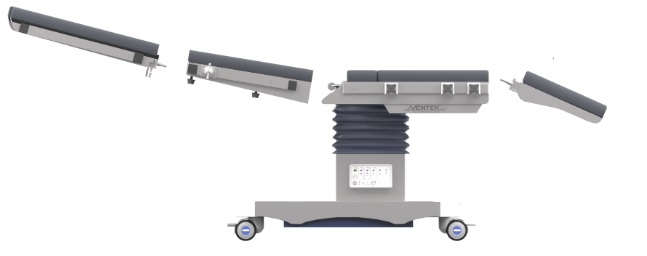
An electric OT table uses electric motors, usually linear actuators, to drive each movement: height, Trendelenburg, lateral tilt, back section and leg section. The staff control everything with a hand remote. Movements are smooth and quiet, and the table can return to a level position at the press of a button.
Electric tables suit general surgery, gynaecology, urology, ENT and laparoscopy, where the patient needs frequent but moderate repositioning.
What Is an Electro Hydraulic OT Table?
An electro hydraulic OT table combines an electric pump with a hydraulic system. The motor powers the pump, and hydraulic cylinders do the lifting and tilting. This design is known for strong lifting capacity and very stable movement under heavy loads.
Electro hydraulic tables are often chosen for orthopaedics, neurosurgery, spine surgery and bariatric patients, where the table must hold heavy loads firmly at unusual angles.
Comparing the Two
- Load capacity: Electro hydraulic tables generally handle heavier patients and attachments better.
- Movement feel: Electric tables are quiet and precise. Electro hydraulic tables are smooth and very steady under load.
- Maintenance: Electric tables need little routine care beyond checking actuators and wiring. Electro hydraulic tables also need hydraulic oil and seal checks.
- Price: Prices vary by brand and features, but electro hydraulic models are usually priced higher than basic electric models.
- Best use: Electric tables for general and gynaecological theatres. Electro hydraulic tables for orthopaedic, neuro and multi-speciality theatres.
Features Worth Paying For
Battery backup
Both table types depend on power. A built-in rechargeable battery lets the team finish a case if the mains supply fails. Ask how many movement cycles the battery supports on a full charge.
Interchangeable head and leg sections
Tables that allow the head and leg sections to be swapped give surgeons more access options, especially for procedures on the lower limbs or for imaging.
Radiolucent top and C-arm clearance
If your theatre uses intraoperative imaging, check that the tabletop is radiolucent and the base allows a C-arm to move freely along the length of the patient.
Emergency controls
A backup control panel on the column lets staff operate the table if the hand remote fails. This is a small feature that matters a great deal in an emergency.
Durable finish
Theatre tables are cleaned many times a day. A stainless steel top and anti-rust coating on the base keep the table in good condition for years.
Common Mistakes When Buying an Electric OT Table
One common mistake is choosing a table only by its brochure. Every brochure lists the same movements, but the quality of actuators, the steadiness of the column at full height and the response of the remote can only be judged by seeing the table work. Another mistake is ignoring the cost of accessories. Orthopaedic or neuro attachments can add a large amount to the final bill if they are not part of the quotation.
Hospitals also sometimes overlook staff training. An electric table offers many preset positions and controls, and the team should be trained properly at installation so that these features are used safely and fully.
How to Decide
Start with the cases each theatre handles. A general surgery or gynaecology theatre with average patient weights is well served by an electric OT table. A theatre that handles orthopaedic trauma, spine or neuro cases, or frequent bariatric patients, benefits from the extra strength of an electro hydraulic OT table.
Then look at practical points: service support in your city, availability of spare actuators or pumps, warranty on the control system and the accessories included in the price.
Final Thoughts
Neither type is better in every situation. The right choice depends on your case mix, patient profile and budget. Many hospitals use electric tables in general theatres and electro hydraulic tables in speciality theatres. Manufacturers such as Ventek India offer both electric and electro hydraulic models, which makes it easier to compare them side by side.
See the table working, test the remote, check the battery backup and confirm service terms before you buy. A well-chosen electric or electro hydraulic table will save your surgical team time in every case.