Mistakes in live sound rarely come from broken equipment. They come from decisions made too early, often based on incomplete understanding. Once the system is deployed, these decisions are hard to reverse without cost.
Below are the most common selection errors and how they affect real setups.
Choosing Based on Power Ratings Alone
In practice, power without context leads to mismatch. A 2000-watt system placed in a small indoor venue may create excessive volume without improving clarity. At the same time, a lower-powered system with higher sensitivity could deliver better results with less strain.
Professional loudspeakers should be assessed using both power handling and efficiency. Ignoring sensitivity often results in overpowered systems that still perform poorly.
Ignoring Coverage Requirements
A system may be powerful enough but fail to distribute sound evenly. This creates areas that are too loud and others that are difficult to hear. Increasing volume does not fix uneven coverage. It amplifies the imbalance.
For example, using a narrow dispersion speaker in a wide venue leaves gaps across the audience. Using overly wide coverage in a reflective space increases echo and reduces clarity.
Selecting professional loudspeakers without matching coverage to the venue layout leads to inconsistent sound.
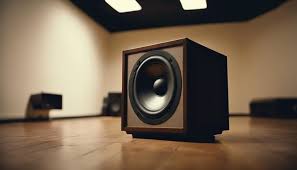
Underestimating the Importance of Subwoofers
In live music setups, this is a mistake. Without proper low-end support, the system lacks depth and impact. Pushing full-range speakers to compensate can cause distortion and reduce lifespan.
A common example is a small band setup using only top speakers. At moderate volume, the sound feels thin. At higher levels, the system struggles because it is handling frequencies it was not designed for.
Proper system design separates low frequencies into dedicated subwoofers. This improves both clarity and durability.
Poor Amplifier Matching
An underpowered amplifier may clip when pushed, sending distorted signals to the speakers. This can damage components even if the speaker’s rated power is not exceeded.
On the other side, an overpowered amplifier without proper control can push the system beyond safe limits.
Professional loudspeakers must be paired with amplifiers that match their continuous power ratings and are supported by correct signal processing.
Overlooking System Processing
Equalization, crossover settings, and limiters shape how the system behaves. Without proper processing, even high-quality speakers produce uneven sound.
For instance, incorrect crossover points can cause overlap between subwoofers and top speakers. This creates muddy sound rather than clear separation.
Processing is not an optional step. It is part of the system.
Failing to Account for Venue Type
Indoor venues introduce reflections. Outdoor setups lack natural boundaries, requiring more controlled projection. Hard surfaces increase echo. Soft surfaces absorb sound.
Selecting professional loudspeakers without considering these factors leads to unpredictable results.
For example, a system that works well outdoors may sound harsh indoors due to reflections. Adjustments in coverage and processing are required depending on the environment.
Ignoring Future Scalability
This creates limitations when requirements grow. Adding more speakers later may not integrate well with the original setup. Compatibility issues can arise with amplifiers and processing units.
Planning for scalability allows the system to expand without complete replacement. This includes selecting components that can integrate with additional units.
Relying on Brand Instead of Application
While quality brands offer reliability, they do not guarantee suitability for every use case. A well-known model may still be wrong for a specific venue or setup.
Professional loudspeakers must be selected based on application requirements first, not brand preference.
Final Consideration
Most selection mistakes come from focusing on isolated factors. Power, brand, or price are considered separately instead of as part of a system.
Live sound setups require alignment between equipment, environment, and usage. When these elements are considered together, the system performs as expected. When they are not, even high-end equipment struggles to deliver consistent results.