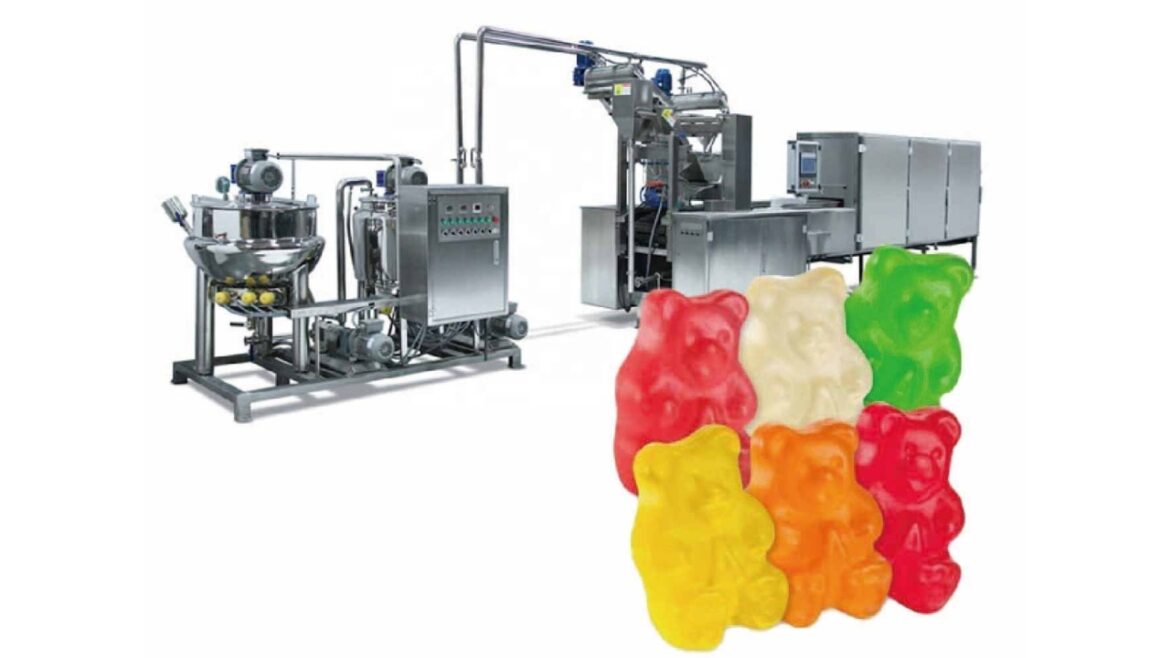
The production of gummy candies involves multiple stages that require precision, consistency, and efficiency. To achieve high-quality products, manufacturers rely on a range of specialized machinery that handles everything from ingredient mixing to packaging. Understanding the top equipment used in a Gummy Candy Production Line is essential for operators, entrepreneurs, and investors seeking to optimize production and maintain product quality. Modern manufacturing lines integrate automation, real-time monitoring, and advanced controls to improve efficiency while reducing waste and labor costs.
Many manufacturers are now upgrading their processes with advanced Gummy Candy Production Line systems that incorporate automated cooking, depositing, molding, cooling, and packaging units. These lines provide the flexibility to produce a wide variety of gummy shapes, sizes, and flavors while maintaining consistent quality. By investing in state-of-the-art equipment, companies can scale production, reduce errors, and respond quickly to market demand for specialty or seasonal products.
1. Ingredient Mixing Machines
Mixing is the first and one of the most critical stages in gummy candy production. High-capacity ingredient mixers are designed to blend sugars, glucose syrup, gelatin or pectin, flavorings, colorings, and other additives uniformly. Variable-speed mixers ensure that all ingredients are dissolved and homogenized, producing a smooth mixture without lumps. Some advanced mixers also include heating elements to assist in dissolving solid ingredients and achieving the correct consistency for the cooking stage.
2. Cooking and Melting Systems
Cooking tanks or kettles are essential for transforming the mixed ingredients into a gelatinous candy mass. Modern cooking systems often feature vacuum cooking technology, which allows precise control of temperature and pressure while preventing caramelization or burning of sensitive ingredients. Continuous cooking systems are also used in large-scale production to maintain a consistent flow of candy mass, ensuring uniform quality across batches. Accurate cooking is crucial to achieve the desired texture, elasticity, and clarity in gummy candies.
3. Depositing Machines
Depositing machines portion the cooked candy mass into molds with high precision. These machines can be single-nozzle or multi-nozzle systems, depending on the type of gummy being produced. Advanced depositing equipment allows the creation of multi-layered or filled gummies by depositing different formulations in precise amounts. This equipment ensures uniformity in size, shape, and weight, which is essential for maintaining product consistency and brand standards.
4. Molding Equipment
Molding is another critical component of the production line. After depositing, the gummy mass is transferred to molds that give it the final shape. Molding equipment can accommodate various designs, including traditional bears, fruits, logos, or customized shapes for seasonal products. Automated molding systems handle large volumes efficiently, reducing manual labor while ensuring every candy has a consistent appearance and size.
5. Cooling and Setting Tunnels
Once molded, gummies must be cooled and set to maintain their shape and texture. Cooling tunnels or temperature-controlled conveyors are designed to regulate the cooling process, preventing deformation or stickiness. Adjustable airflow and temperature controls allow the machinery to handle different gummy formulations, including soft, layered, or filled products. Proper cooling ensures the candy maintains its desired elasticity, firmness, and mouthfeel.
6. Demolding and Coating Systems
After setting, gummies are removed from molds and may undergo coating processes, such as sugar or sour powder application. Automated demolding systems ensure efficient removal without damaging the product. Coating machines uniformly apply the finishing layer, enhancing the aesthetic appeal, taste, and shelf life of the gummies. This step is especially important for gummies with delicate textures or intricate shapes.
7. Quality Control Equipment
Maintaining consistent quality is critical in gummy candy production. Integrated quality control (QC) systems monitor key parameters such as weight, size, color, pH, and texture in real time. Sensors and software allow automatic adjustments if deviations are detected, minimizing waste and defective batches. QC integration ensures compliance with food safety regulations and maintains the brand’s reputation for high-quality products.
8. Packaging Machinery
The final stage of the production line involves packaging gummies into pouches, boxes, or bulk containers. Modern packaging equipment can handle different shapes, sizes, and formats while maintaining product integrity. Automated systems include weighing, sealing, labeling, and cartoning functions to improve efficiency, reduce human error, and extend shelf life. Some lines even allow multi-pack options or customizable packaging for promotional purposes.
Conclusion
A complete Gummy Candy Production Line relies on specialized equipment at each stage to ensure efficiency, consistency, and high-quality output. From ingredient mixing and cooking to depositing, molding, cooling, coating, quality control, and packaging, each machine plays a vital role in the manufacturing process.
Investing in advanced and automated equipment enables manufacturers to scale production, reduce waste, maintain consistent product quality, and innovate with new shapes, flavors, and functional formulations. Understanding the top equipment used in gummy candy production is crucial for operators seeking to optimize processes and meet growing consumer demand in the competitive confectionery market.