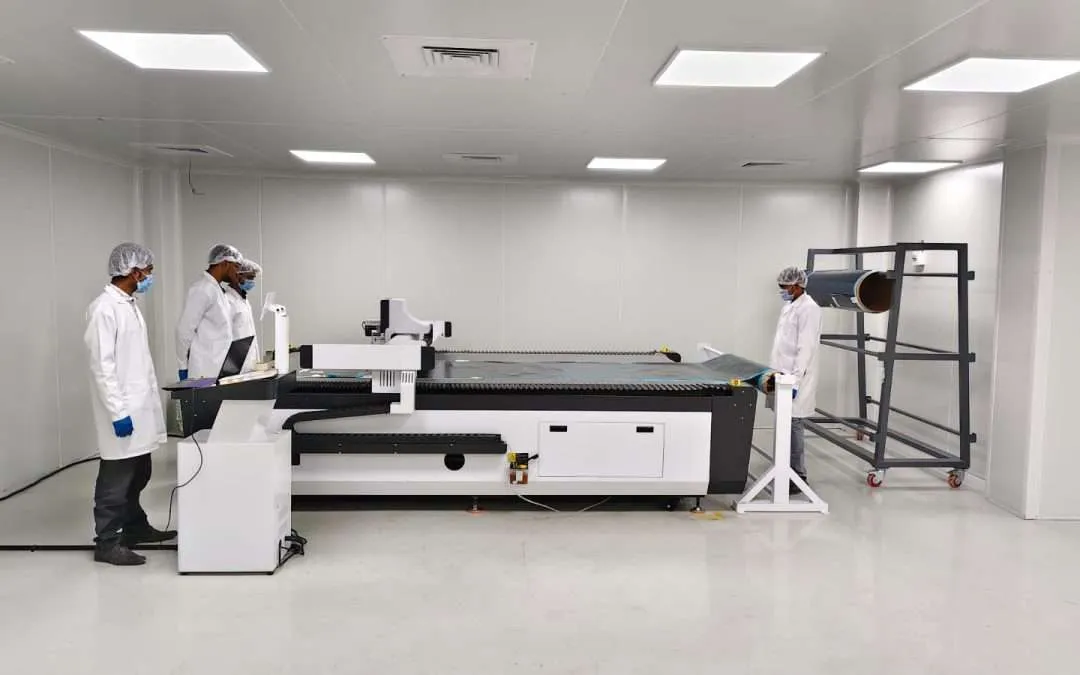
ISO 8 cleanrooms are controlled environments that maintain specific levels of airborne particulate contamination to protect sensitive processes, products, and equipment. These cleanrooms are widely used in industries such as pharmaceuticals, biotechnology, medical device manufacturing, and electronics. Unlike higher-class cleanrooms, such as ISO Class 5 or ISO Class 7, ISO 8 cleanrooms are designed to manage moderate levels of contamination, making them suitable for processes where ultra-low particle concentrations are not required but contamination control remains critical.
The control of particle concentrations in an ISO 8 cleanroom is essential to ensuring product quality, operational efficiency, and regulatory compliance. Particle limits are defined by the ISO 14644-1 standard, which provides a framework for classifying cleanrooms based on maximum allowable airborne particles per cubic meter. For a comprehensive understanding of ISO 8 cleanroom requirements, including particle concentration guidelines, airflow, and filtration systems, resources such as the ISO 8 Cleanroom offer detailed insights for industry professionals and facility planners.
Understanding Particle Concentration Limits
Particle concentration limits define the maximum number of airborne particles allowed in a cleanroom at specific sizes. In an ISO 8 cleanroom, the limits are significantly higher than in stricter classifications such as ISO Class 5 or ISO Class 7. For particles measuring 0.5 micrometers or larger, ISO 8 cleanrooms permit a maximum of 3,520,000 particles per cubic meter of air. Smaller particles, such as those measuring 0.1 micrometers, are also limited but in larger quantities, reflecting the moderate level of cleanliness required for ISO 8 processes.
These particle limits serve as the basis for cleanroom design, operational protocols, and monitoring strategies. By understanding the allowable particle concentrations, facility managers can implement effective filtration, airflow, and environmental control systems to maintain compliance and prevent contamination-related issues.
Filtration Systems and Particle Control
Maintaining particle concentrations within ISO 8 limits relies heavily on proper filtration. High-efficiency particulate air (HEPA) filters are commonly used to remove a large portion of airborne particles, although the coverage and efficiency requirements are lower than in ISO Class 5 or Class 7 cleanrooms. The placement and maintenance of these filters are critical, as even small leaks or blockages can lead to elevated particle counts.
Airflow design complements filtration in controlling particles. ISO 8 cleanrooms may use turbulent or partially unidirectional airflow systems to distribute clean air and remove contaminants generated by personnel or equipment. Air changes per hour are calculated to ensure sufficient dilution of particles, with system design tailored to the specific layout, occupancy, and process requirements of the cleanroom.
Environmental Factors Affecting Particle Levels
Environmental factors, such as temperature, humidity, and pressure, can influence particle concentrations in ISO 8 cleanrooms. Positive pressure relative to surrounding areas helps prevent infiltration of contaminated air. Temperature and humidity control prevent condensation, particle adhesion, and microbial growth, which can all increase particulate levels. Monitoring systems track these parameters in real time, enabling quick corrective actions when deviations occur.
Material and personnel movement also affect particle levels. High traffic, improper gowning, or frequent handling of materials can generate particles, making workflow planning and personnel protocols essential to maintaining ISO 8 standards. Proper gowning, airlocks, and controlled entry points help reduce contamination risks from human activity.
Monitoring and Verification of Particle Concentrations
Regular monitoring of particle concentrations is a key requirement for ISO 8 cleanrooms. Portable or fixed particle counters are used to measure airborne particle counts at critical locations within the cleanroom. Monitoring helps verify that the environment complies with ISO 14644-1 limits and identifies trends that may indicate issues with filtration, airflow, or cleaning practices.
Verification procedures often include periodic testing of particle levels under operational conditions, known as “at-rest” and “in-operation” testing. “At-rest” testing measures particle counts when the cleanroom is empty, while “in-operation” testing evaluates conditions during normal production activities. Both testing methods are essential for validating that the ISO 8 cleanroom consistently meets particle concentration limits.
Cleaning and Maintenance Practices
Maintaining particle concentrations within ISO 8 limits requires effective cleaning and maintenance practices. Surfaces, equipment, and floors must be regularly cleaned with approved, low-lint materials and disinfectants. Preventive maintenance of filtration systems, HVAC components, and monitoring equipment ensures that the cleanroom continues to operate within specification.
Routine inspections and audits are essential for verifying compliance with particle limits. Data from monitoring and maintenance activities are documented for regulatory purposes and to guide continuous improvement in cleanroom operations.
Applications and Advantages of ISO 8 Cleanrooms
ISO 8 cleanrooms are ideal for processes that require controlled environments without the complexity and cost of higher-class cleanrooms. Common applications include non-sterile pharmaceutical production, medical device assembly, laboratory research, and electronics manufacturing. These cleanrooms offer a balance between contamination control, operational flexibility, and cost-efficiency.
By adhering to particle concentration limits, organizations can ensure consistent product quality, protect equipment, and comply with industry standards. ISO 8 cleanrooms provide a practical solution for processes where moderate contamination control is sufficient, while still supporting reliable and safe operations.
Conclusion
Particle concentration limits are a fundamental aspect of ISO 8 cleanroom design and operation. Understanding the allowable particle counts, implementing effective filtration and airflow systems, controlling environmental parameters, and monitoring operations are all critical to maintaining compliance. ISO 8 cleanrooms provide an effective balance of cleanliness, efficiency, and cost, making them suitable for a wide range of industrial and research applications. By rigorously controlling particle concentrations, organizations can ensure product quality, operational reliability, and regulatory compliance in moderately controlled environments.