Aluminium has become an important material across modern construction, manufacturing, transportation, and engineering because it combines low weight with strength, durability, and corrosion resistance. Its ability to take different shapes and accommodate various finishing requirements also makes it suitable for applications ranging from structural frameworks to architectural components and industrial equipment. As industries continue to look for materials that can improve performance without adding unnecessary weight, aluminium extrusion has become an increasingly practical manufacturing solution.
For manufacturers, however, choosing the right extrusion is about more than selecting a lightweight metal. Dimensions, profile geometry, alloy selection, surface quality, application requirements, and manufacturing consistency all influence the final performance of a component. This is where standard aluminium extrusions can offer a practical foundation for projects that require dependable profiles with commonly used shapes and dimensions.
What Makes Aluminium Extrusion Useful for Modern Applications?
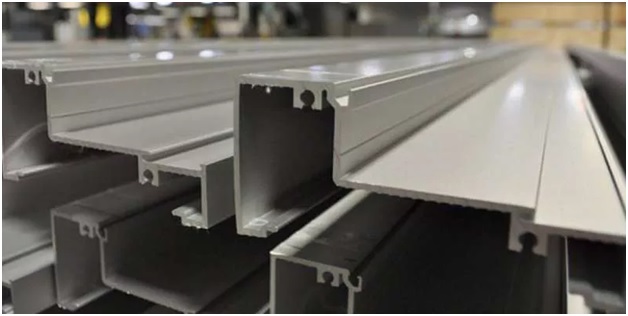
Aluminium extrusion is a manufacturing process in which an aluminium billet is heated and pushed through a specially designed die to create a continuous profile. The resulting shape can then be cut, machined, or finished according to the requirements of the application. This process allows manufacturers to create everything from straightforward bars and tubes to complex profiles designed for specialised industrial requirements.
One of the biggest advantages of extrusion is design flexibility. Aluminium can be formed into profiles that combine structural strength with relatively low weight. This makes it particularly useful when engineers need components that are easy to handle, transport, assemble, or integrate into larger systems.
The extrusion process can also provide consistency across production runs. For projects involving multiple identical components, maintaining uniform dimensions and geometry is essential. A consistent profile can simplify fabrication and assembly while helping manufacturers maintain predictable product performance.
Where Standard Profiles Find Their Place
Different industries require different types of aluminium components, but many applications can be addressed using commonly available profile shapes. Bars, tubes, channels, angles, and other geometric sections can be incorporated into structures, frames, machinery, and fabricated assemblies.
Construction is one important area where these profiles are widely used. Aluminium sections can contribute to window systems, doors, partitions, facades, framing structures, and other architectural applications. Their combination of strength, corrosion resistance, and visual appeal makes them suitable for both functional and design-oriented requirements.
Industrial manufacturing is another major application area. Profiles can be incorporated into machine structures, equipment frames, workstations, enclosures, supports, and production systems. Their relatively low weight can make handling and installation more convenient without compromising the structural requirements of many applications.
Transportation and automotive manufacturing also benefit from aluminium’s strength-to-weight characteristics. Components made through extrusion can help manufacturers develop structures that balance durability with weight considerations. The material is also used across electrical, electronics, HVAC, solar, and engineering applications.
Why Standardisation Matters in Manufacturing
When a project can be fulfilled using commonly available profiles, standardisation can simplify several stages of manufacturing. Engineers can work with established dimensions rather than developing an entirely new geometry for every requirement.
This can reduce unnecessary design complexity and make procurement more straightforward. Standard profiles may also be easier to integrate into existing systems because their shapes and dimensions are already familiar to designers, fabricators, and installation teams.
Another advantage is application flexibility. A single profile category can potentially be used across different projects with appropriate cutting, machining, joining, or finishing. This gives manufacturers greater freedom when developing components for different customers or production requirements.
For businesses handling recurring projects, using reliable aluminium extrusion profiles can also support consistency across different production batches. When dimensions and material specifications are maintained carefully, manufacturers can achieve greater predictability during fabrication and assembly.
Selecting the Right Aluminium Profile
Although standard profiles can simplify material selection, the right choice still depends on the application’s technical requirements. Engineers need to consider factors such as load-bearing expectations, dimensions, wall thickness, alloy composition, environmental exposure, and the method through which the profile will be assembled.
The intended finish also deserves attention. Aluminium profiles can undergo processes such as anodising or powder coating to provide additional aesthetic and functional characteristics. Anodising can create a protective and decorative surface, while powder coating allows manufacturers to achieve different colours and textures.
Machining requirements should also be evaluated before finalising a profile. Depending on the application, extrusion may be followed by cutting, drilling, milling, punching, bending, or other operations. Choosing a profile that accommodates these processes efficiently can help reduce fabrication challenges.
For specialised projects, a standard profile may not always be sufficient. In such cases, manufacturers with custom extrusion capabilities can develop profiles around specific engineering requirements. This approach is particularly useful when an application demands a unique geometry, tighter tolerances, or integration of multiple functional features into a single extrusion.
Surface Treatment Can Add Functional and Visual Value
The performance of an aluminium component does not depend only on its basic extrusion. Surface treatment can play an important role in determining how the finished product looks and performs in its intended environment.
Anodising creates a protective oxide layer on the aluminium surface and can provide a durable decorative appearance. It is commonly considered for architectural and other applications where both surface quality and durability matter.
Powder coating provides another option, particularly where colour and surface appearance are important. Modern coating systems can support a broad range of colour choices and finishes, making them suitable for architectural elements as well as industrial products where visual consistency matters.
Selecting the appropriate treatment depends on the environment, expected service conditions, appearance requirements, and desired product life. This is why extrusion and finishing capabilities can be valuable when sourced through a single manufacturing partner.
Quality Control Is Central to Reliable Extrusions
A high-quality extrusion requires more than modern machinery. Consistent manufacturing depends on appropriate material selection, controlled processing, dimensional accuracy, finishing quality, and inspection at different stages of production.
Quality control becomes particularly important for applications where profiles must fit precisely into larger assemblies. Variations in dimensions or surface condition can create problems during fabrication, installation, or final use.
Experienced extrusion manufacturers therefore combine production technology with engineering expertise and quality systems. JM Aluminium, for example, lists quality control alongside extrusion, powder coating, anodising, and machining among its core capabilities. Its manufacturing operations also include dedicated design and die-development resources for customised extrusion requirements.
Choosing an Experienced Extrusion Partner
For businesses sourcing aluminium profiles, manufacturing capability should be considered alongside product availability. A suitable supplier should be able to understand the application’s requirements, recommend appropriate materials and profiles, and provide finishing or machining support where necessary.
Production capacity can also matter when projects involve large volumes or recurring requirements. Consistent supply, dependable delivery, engineering support, and quality control can help reduce disruptions throughout the manufacturing cycle.
The availability of both standard and customised solutions can provide additional flexibility. Businesses can use established profiles where they are suitable while moving towards custom extrusion when a project requires a more specialised design.
Conclusion
Aluminium extrusion provides manufacturers and designers with a flexible way to create lightweight, durable, and application-specific components. From construction frameworks and architectural systems to industrial machinery, transportation, electronics, HVAC, and solar applications, aluminium profiles can support a wide range of modern engineering requirements.
For projects that rely on proven shapes and dependable dimensions, standard aluminium extrusions can simplify design, fabrication, and procurement while maintaining the versatility associated with aluminium. At the same time, access to machining, anodising, powder coating, quality control, and custom profile development can help businesses address more specialised requirements.
With its extensive extrusion capabilities, finishing services, engineering support, and experience across multiple industries, JM Aluminium provides solutions designed around both standard and customised aluminium requirements.