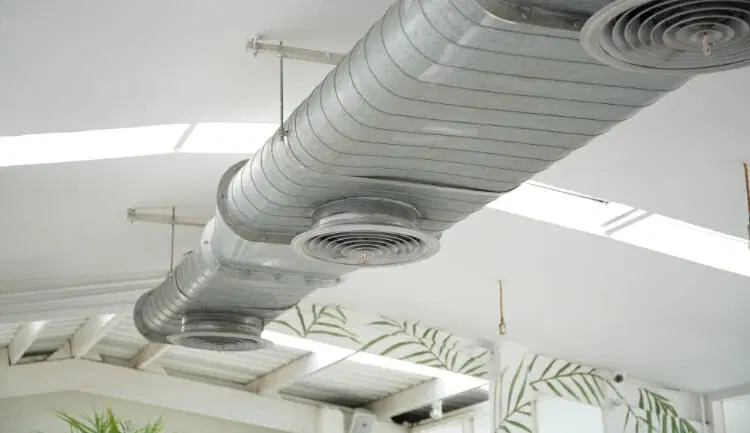
Efficient airflow distribution is one of the most important goals in HVAC system design. It directly affects indoor comfort, energy consumption, and overall system performance. Grilles and diffusers play a central role in achieving this balance by controlling how air is delivered and returned throughout a space.
Understanding how grilles and diffusers manufacturers design and produce these components helps explain why product quality and engineering precision are critical for effective HVAC performance in residential, commercial, and industrial environments.
The Role of Airflow Distribution in HVAC Systems
Airflow distribution ensures that conditioned air reaches all areas of a building evenly. Without proper distribution, spaces may experience hot or cold spots, poor ventilation, or wasted energy.
Manufacturers contribute to airflow efficiency by designing products that:
- Direct air evenly across rooms
- Maintain consistent temperature levels
- Reduce pressure loss in HVAC systems
- Improve overall indoor comfort
Engineering Design for Optimal Airflow
Manufacturers use advanced engineering principles to ensure grilles and diffusers perform efficiently under different conditions.
Aerodynamic Design Principles
Diffusers are designed to control airflow direction, velocity, and spread. Manufacturers focus on:
- Air throw distance optimization
- Even air mixing within spaces
- Reduction of turbulence and dead zones
- Balanced airflow patterns
Grilles, while simpler in function, are also designed to minimize resistance and support smooth air return.
Material Selection and Its Impact on Airflow
The materials used in manufacturing directly affect airflow performance and system durability.
Common Materials Used
- Aluminum for lightweight strength and corrosion resistance
- Galvanized steel for industrial durability
- High-grade plastics for cost-effective applications
Material quality ensures stable airflow behavior and long-term structural integrity.
Precision Manufacturing Processes
Accurate production is essential for maintaining consistent airflow distribution across all units.
Key Manufacturing Practices
- Tight dimensional tolerances for uniform airflow
- Smooth surface finishing to reduce resistance
- Consistent blade or slot alignment
- Automated production for accuracy and repeatability
These processes help ensure that every product performs consistently in HVAC systems.
Airflow Testing and Performance Validation
Reliable manufacturers conduct extensive testing to verify airflow efficiency before products reach the market.
Common Tests Include:
- Air distribution pattern testing
- Pressure drop measurement
- Noise level evaluation
- Velocity consistency checks
These tests ensure that grilles and diffusers meet performance expectations in real-world applications.
Product Design for Different Applications
Manufacturers design grilles and diffusers for a wide range of environments, each with unique airflow requirements.
Residential Applications
Focus on quiet operation and comfortable airflow distribution.
Commercial Buildings
Require uniform air distribution across large spaces such as offices and retail areas.
Industrial Facilities
Need high-capacity airflow handling and durable construction.
Healthcare Environments
Demand precise airflow control for hygiene and comfort.
Types of Grilles and Diffusers and Their Function
Different product types are designed to optimize airflow distribution in specific ways.
Common Diffuser Types
- Ceiling diffusers for even air distribution
- Linear slot diffusers for directional airflow
- Swirl diffusers for enhanced air mixing
- Jet diffusers for long-distance airflow
- Floor diffusers for specialized systems
Common Grille Types
- Fixed blade grilles for return air
- Adjustable blade grilles for airflow control
- Door transfer grilles for pressure balancing
Each type plays a specific role in achieving efficient airflow distribution.
Quality Control for Consistent Performance
Strict quality control ensures that every unit performs as intended and contributes to balanced airflow.
Quality Control Measures Include:
- Raw material inspection
- In-process manufacturing checks
- Final product airflow testing
- Dimensional accuracy verification
These steps reduce inconsistencies and improve overall HVAC system reliability.
Importance of System Compatibility
Manufacturers also ensure that grilles and diffusers integrate properly with HVAC system designs.
Key considerations include:
- Matching airflow capacity with system requirements
- Ensuring proper pressure balance
- Supporting ductwork compatibility
- Aligning with installation conditions
Proper compatibility ensures efficient system operation and prevents performance issues.
Innovation in Airflow Technology
Modern manufacturers continuously improve designs to enhance airflow efficiency and system performance.
Recent Innovations Include:
- Low-resistance airflow structures
- Energy-efficient diffuser designs
- Noise-reducing internal configurations
- Improved air mixing technologies
These advancements help reduce energy consumption while improving comfort levels.
Conclusion
Grilles and diffusers manufacturers play a vital role in ensuring efficient airflow distribution in HVAC systems. Through advanced engineering design, precision manufacturing, material selection, and rigorous testing, they help create products that deliver stable, balanced, and efficient air movement.
By understanding how grilles and diffusers manufacturers approach airflow optimization, engineers and project managers can make better decisions that improve indoor comfort, reduce energy usage, and enhance long-term HVAC system performance across all types of buildings.