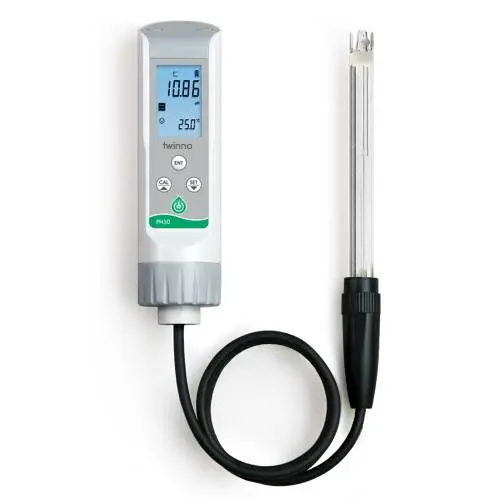
Measuring pH accurately is essential in industries where chemical balance directly affects quality, safety, and efficiency. From monitoring drinking water to controlling industrial reactions, pH measurement helps professionals understand how acidic or alkaline a solution is and how it may behave over time. Because operating environments vary widely, different types of pH sensors have been developed to meet specific technical and practical needs.
Why Multiple pH Sensor Types Exist
No single pH measurement device can perform optimally in every condition. Factors such as temperature, pressure, chemical composition, and response time all influence sensor performance. As a result, engineers and scientists rely on a variety of pH sensors designed for laboratory precision, industrial durability, or field-based flexibility. Selecting the correct type improves accuracy, extends sensor life, and reduces maintenance costs.
Glass Electrode pH Sensors
Glass electrode sensors are the most widely used and recognized type. They operate using a thin, pH-sensitive glass membrane that reacts specifically with hydrogen ions in a solution. This interaction generates a voltage proportional to the pH level, which is then converted into a readable value.
These sensors are commonly found in laboratories, water treatment facilities, and quality control departments. Their high accuracy and broad measurement range make them ideal for applications where precision is critical. However, glass electrodes are relatively fragile and may require careful handling and regular calibration.
Combination pH Sensors
Combination sensors integrate the measuring electrode and reference electrode into a single body. This design simplifies installation and reduces potential measurement errors caused by electrode misalignment or contamination. Because of their convenience and reliability, combination sensors are widely used in industrial process control and continuous monitoring systems.
Their compact structure makes them suitable for pipelines, tanks, and reactors where space is limited. Many modern combination sensors are also designed to withstand moderate pressure and temperature variations, increasing their versatility across industries.
ISFET pH Sensors
Ion-Sensitive Field-Effect Transistor (ISFET) sensors represent a more modern approach to pH measurement. Instead of a glass membrane, they use a semiconductor surface that responds to hydrogen ion activity. Changes in ion concentration alter the electrical field, which is then measured electronically.
ISFET sensors are known for their fast response time, mechanical durability, and resistance to breakage. These characteristics make them ideal for medical devices, food processing, and portable instruments. They also perform well in applications where glass sensors may be impractical due to vibration or risk of impact.
Optical pH Sensors
Optical pH sensors rely on color changes in pH-sensitive dyes rather than electrochemical reactions. When exposed to a solution, the dye changes color depending on the pH level. Optical systems then analyze this color shift to determine pH.
These sensors are particularly useful in environments where electrical interference is a concern or where long-term stability is required without frequent calibration. Applications include biotechnology, environmental monitoring, and laboratory research. While optical sensors may not always match the precision of electrochemical types, they offer advantages in specific niche scenarios.
Solid-State and Industrial pH Sensors
For harsh industrial environments, solid-state pH sensors are designed to handle high temperatures, strong chemicals, and abrasive materials. These sensors often feature reinforced housings, specialized membranes, and advanced reference systems to ensure stable performance.
They are commonly used in chemical manufacturing, mining, wastewater treatment, and power generation. Their durability reduces downtime and maintenance frequency, making them cost-effective for continuous operation under demanding conditions.
Choosing the Right pH Sensor for Practical Use
Selecting the appropriate pH sensor depends on application requirements rather than price or popularity alone. Laboratory testing may prioritize accuracy and repeatability, while industrial processes may demand robustness and low maintenance. Field measurements often require portability and rapid response.
Understanding the differences between sensor types helps decision-makers match technology to operational needs. Factors such as calibration frequency, temperature range, chemical exposure, and installation method should all be considered during selection.
The Role of pH Sensors in Modern Industry
As industries become more automated and data-driven, reliable pH measurement continues to play a critical role. Whether ensuring safe drinking water, maintaining product consistency, or protecting equipment from corrosion, pH sensors support informed decision-making at every level.
By recognizing the strengths and limitations of each sensor type, organizations can improve measurement accuracy, optimize processes, and maintain compliance with regulatory standards. This practical understanding ensures that pH monitoring remains a cornerstone of modern scientific and industrial operations.